
Positive reinforcement for kids is a behavioral strategy that rewards desired actions to encourage repetition. Used consistently in preschool, kindergarten, and elementary classrooms, it reduces disruptive behavior, builds student confidence, and creates a more supportive learning environment without requiring elaborate systems or significant resources.
Recognizing good behavior might sound simple. But the science behind it is anything but. Positive reinforcement for kids is one of the most well-researched strategies in education, backed by decades of behavioral psychology showing that children respond far better to encouragement than correction.
For educators and parents, that’s a meaningful shift in perspective. Rather than waiting for something to go wrong, positive reinforcement asks: what’s going right, and how can we make more of it happen?
What Is Positive Reinforcement for Kids?

Positive reinforcement for kids is a behavioral strategy that involves rewarding a desired action to encourage it to happen again. The reward doesn’t have to be elaborate. What matters most is that it’s immediate, meaningful, and clearly connected to the behavior you want to reinforce.
Common examples include:
- Verbal praise – “Great job raising your hand before speaking!”
- Stickers, award pins, buttons, or certificates – tangible recognition that children can see and collect
- Small classroom rewards – pencils, ribbons, or prizes that feel special without being costly
The key distinction between positive reinforcement and punishment is directional. Punishment tries to stop unwanted behavior. Positive reinforcement builds on good behavior – encouraging children to repeat the actions that earn them recognition and reward. Research in behavioral psychology, including work rooted in B.F. Skinner’s operant conditioning model, consistently supports this approach as more effective for long-term behavioral change in children.
Why Positive Reinforcement Matters in Preschool and Elementary Classrooms
Positive reinforcement supports early development
Positive reinforcement in a preschool classroom plays a foundational role in early childhood development. Young children are still forming their understanding of social expectations, boundaries, and cause-and-effect relationships. When a preschooler hears, “I love how you shared your blocks with your friend,” that moment of recognition does more than make them smile. It helps them build an internal map of what positive behavior looks like.
Kindergarten positive reinforcement works similarly. At this stage, children are navigating new routines, larger social groups, and more structured learning. Consistent encouragement helps them feel safe in that environment, which directly affects their willingness to participate and take risks.
Key reasons positive reinforcement works in early childhood settings:
- Helps children understand expectations by clearly connecting behavior to outcomes
- Builds a positive association with learning that can carry into later school years
- Encourages participation and engagement, particularly in children who are shy or anxious
Positive reinforcement plays an important role
Positive reinforcement in elementary classrooms supports both academic performance and emotional growth. As children move into structured academic learning, their confidence becomes a significant factor in how they engage with challenging material.
Positive reinforcement for elementary students also improves peer dynamics. When classrooms celebrate kindness, cooperation, and effort—not just achievement—students learn to support each other. That shift in culture can reduce conflict and help children develop stronger social skills alongside their academic ones.
Effective Positive Reinforcement Techniques for Teachers and Parents
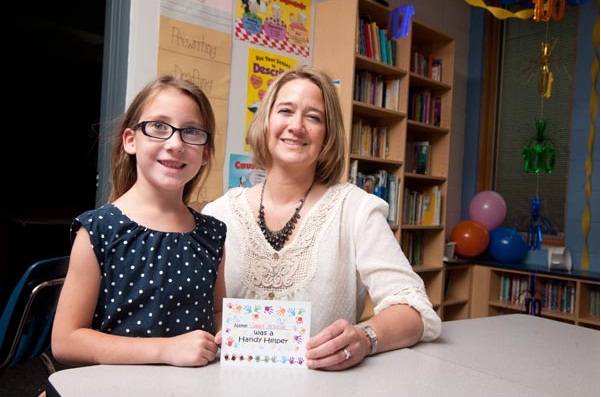
The most impactful techniques are often the simplest. Here are four approaches that educators and parents can start using immediately:
1. Verbal Praise
Specific, genuine praise is one of the most powerful tools available – and it costs nothing. Rather than a generic “good job,” try naming exactly what the child did well: “I noticed you stayed focused during the whole reading activity. That’s really impressive.” Specificity signals to the child that you’re paying attention, which amplifies the impact of the praise.
2. Reward Systems
Structured systems, like sticker charts, token boards, or certificate programs, give children a visual sense of progress. Seeing a chart fill up motivates continued effort. Affordable classroom rewards such as pencils, ribbons, bookmarks, and small prizes can serve as meaningful incentives, especially for elementary students who respond well to tangible goals.
3. On-the-spot Rewards
Timing matters. Immediate recognition creates a stronger behavioral association than delayed rewards. A sticker given right after a child completes a task, or a quick word of praise the moment a student demonstrates kindness, reinforces the connection between the behavior and the reward far more effectively than end-of-week recognition.
4. Celebrating Small Wins
Not every achievement needs to be a big one. Acknowledging incremental progress – finishing a difficult worksheet, asking a question in class for the first time, or simply showing up with a positive attitude – teaches children that effort itself is worth recognizing. This mindset supports resilience and a healthy relationship with challenge.
Benefits of Positive Reinforcement For Kids
When applied consistently, positive reinforcement in schools produces measurable improvements in both behavior and learning outcomes. The benefits extend beyond individual students, shaping the overall culture of a classroom.
Key benefits include:
- Reduced disruptive behavior – when students feel seen and valued, the need to seek attention through negative behavior decreases
- Improved classroom environment – a culture of recognition creates a safer, more collaborative space for everyone
- Greater student confidence and self-esteem – children who are regularly praised for their efforts develop a stronger belief in their own abilities
- Lifelong learning habits – early associations between effort and positive outcomes can shape a child’s attitude toward education for years
Children who receive consistent positive reinforcement are more likely to take academic risks, participate actively in discussions, and develop the emotional regulation skills needed to thrive socially and academically.
Make Positive Reinforcement For Kids a Practice, Not Just a Strategy
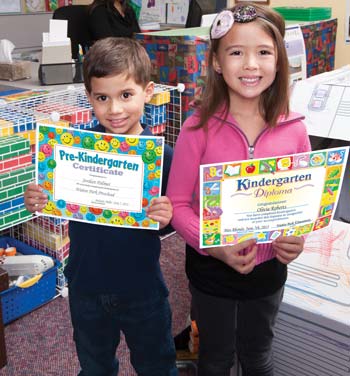
Positive reinforcement for kids isn’t a one-time classroom intervention. It’s a sustained commitment to noticing and naming the good. When teachers and parents apply it consistently, across preschool, kindergarten, and elementary settings, the cumulative effect is profound.
Small moments of recognition add up. A sticker on a Monday, a specific compliment on a Wednesday, a certificate at the end of the month – these gestures tell a child that their behavior matters, that their effort is seen, and that they belong in the learning environment. That kind of foundation doesn’t just improve behavior in the short term. It shapes how a child sees themselves as a learner for years to come.
Frequently Asked Questions
What is positive reinforcement in a classroom?
Positive reinforcement in a classroom is the practice of rewarding students for desired behaviors—such as participation, cooperation, or staying on task. Rewards can include verbal praise, stickers, or small incentives. This approach encourages students to repeat those behaviors and helps build a structured, supportive learning environment, particularly in preschool and elementary classrooms.
How does positive reinforcement help elementary students?
Positive reinforcement helps elementary students by boosting confidence, improving behavior, and increasing classroom engagement. When students are recognized for their efforts—not just their results—they become more motivated to participate and persevere through challenges. It also reduces classroom disruptions and fosters a more cooperative peer culture.
What are examples of positive reinforcement for kids?
Examples include specific verbal praise (“I’m proud of how you kept trying even when it was hard”), sticker charts, tokens, certificates, and small tangible rewards like pencils or bookmarks. On-the-spot recognition is particularly effective, as it reinforces the direct link between a behavior and the positive outcome that follows.
Is positive reinforcement effective for all age groups?
Yes, though the approach may vary. Kindergarten positive reinforcement tends to rely on immediate, simple rewards like stickers and verbal praise. Older elementary students may respond better to goal-oriented systems, peer recognition, or more structured reward programs. The core principle—rewarding desired behavior promptly and specifically—applies across all early childhood age groups.
Can positive reinforcement be used at home as well as at school?
Absolutely. Positive reinforcement is just as effective at home as it is in the classroom. Parents who acknowledge specific behaviors—finishing homework without being asked, helping a sibling, or managing frustration calmly—reinforce those behaviors in the same way teachers do. Consistency between home and school environments strengthens the impact.